

StanleyBet Welcome Bonus, StanleyBet Bonus
In 2026, it pays to understand access, profile, deposit, limits, and withdrawal before activating offers on your account without haste.
Table of Contents
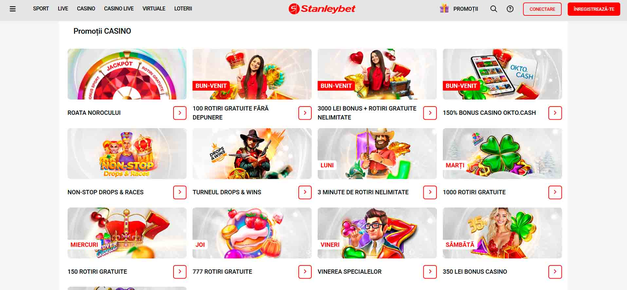
Bonuses & Promotions
100% up to $500
+ 77 Free Spins on first deposit
77 Free Spins
Every Friday on deposit
50% up to $300
On every second deposit
Up to 15%
Every Monday on losses
Casino Overview
| Established | 2019 |
|---|---|
| License | Curaçao eGaming |
| Games Available | 3,000+ |
| Minimum Deposit | $5 |
| Withdrawal Time | Instant – 24h |
| Customer Support | 24/7 Live Chat & Email |
Game Providers







How to navigate the StanleyBet casino in Italy in 2026

When a user enters an online casino, they usually look at the main promotion first and only then try to understand how to manage their account. This is a normal sequence, but not always the most useful. In 2026, it's better to do the opposite: first observe the flow, then understand the wallet, then see where games, support, and control tools are located. StanleyBet can be considered a platform available in Italy for adult users, in compliance with applicable rules and with attention to responsible account management.
Imagine a simple situation. You open your profile from your phone during a break and want to understand in a few minutes if you like it. If you immediately find the balance, the personal area, and the key sections, you're off to a good start. If, instead, you have to search for everything in unclear menus, the feeling of friction arises even before the first deposit.
Many more cautious users do this: they don't click the initial banner right away, but first check their profile, see how the wallet looks, and read where limits, history, and support requests appear. This small order helps a lot. It reduces errors, lowers haste, and makes it easier to understand if the platform is suitable for short sessions or more regular use during the week.
The quality of the experience doesn't just depend on the initial offer. What matters is how registration, balance, games, payments, and support work together. If each section usa a coherent logic, the user doesn't need to guess what to do. And when the flow is clear, even a short trial allows you to understand if the account is truly comfortable to manage.
StanleyBet Bonus: what to look at before activating it
The most common mistake is to only look at the number shown in the offer and not its real mechanics. Before activating any proposal, it's worth understanding how it starts, what steps it requires, where it's shown in the account, and how it affects the available balance. Imagine logging in in the evening with the idea of doing everything in a few minutes: it's precisely at that moment that it's useful to stop, read in order, and verify if the offer's dynamics truly suit your budget and your time.
Usually, the most organized users ask themselves four very practical questions: is a minimum deposit required, does the profile need to be complete, does the additional balance appear separately, is the duration compatible with my habits? These are not secondary details. They are the elements that transform an offer from a visual promise into a concrete tool within the account. If clarity and order are lacking, the experience quickly becomes complicated.
StanleyBet No Deposit Bonus: when it makes sense to consider it
An offer that doesn't require an immediate deposit might seem the simplest one. In practice, however, it should be observed with the same method as any other formula. It's worth understanding where it appears in the account, how it's shown in the wallet, and which game categories are best suited for an initial trial. Imagine logging in just to understand how the platform works, without wanting to commit your money right away: in that case, this option can make sense, especially as a test of the flow.
Many users use offers of this type incorrectly, that is, as if the presence of an initial formula eliminated the need to set a personal limit. In reality, it's useful to behave as if the budget already existed. Setting a maximum time, a number of games to try, and a time to stop makes the trial much more useful. The real advantage is not "playing for free" in abstract, but understanding if the account, menus, and wallet work clearly.
Registration, verification, and initial profile checks

Registration is not a formality to be closed as quickly as possible. It's the point on which access, payments, future requests, and the overall quality of the flow depend. Name, contact details, date of birth, and profile data must be treated with care because even a small error can slow down phases that seem distant but arrive sooner than expected.
Imagine filling out the form in the evening, while answering messages or doing other things. An old contact detail or a wrong number is enough to create a snag that you'll only notice later. Maybe not immediately, maybe at the moment you want to clarify an operation or update something in your profile. That's why it's worth dedicating those few minutes only to registration and rereading everything before confirming.
Usually, the most attentive users follow a simple logic: they complete the data, check that it matches the documents they might use later, and only then do they truly enter the lobby. It's not slowness, it's order. This approach reduces the risk of subsequent corrections and makes the account more stable from the start.
Profile verification is often perceived as a tedious step. In practice, it's a useful moment to tidy up the account and avoid certain requests arriving at the most inconvenient time. If you already know you'll use the platform beyond the first visit, tackling the documentation part calmly helps a lot. It takes pressure off you later and makes every subsequent step more readable.
How to avoid errors in personal data
The best way is not to do everything while you are distracted. If you are creating an account, take a few full minutes and check riga for riga name, surname, address, and contacts. Imagine wanting to close the form quickly from your phone while walking or waiting for someone: it's precisely in these contexts that the most sensitive fields are mistaken. A final, even brief, reread is worth more than any correction made later.
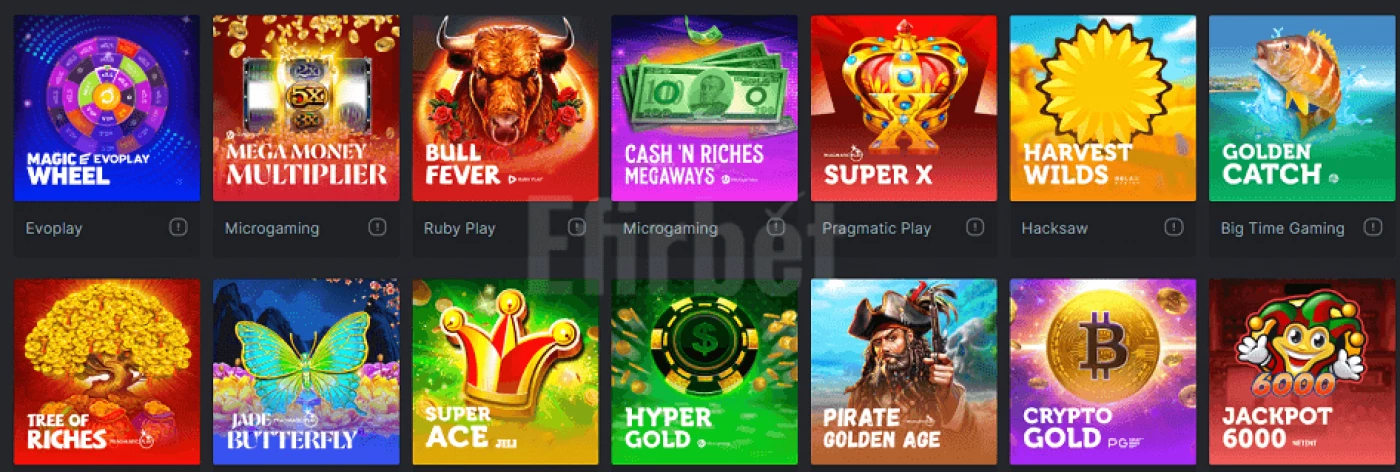
Popular Games








Deposit, personal threshold, and session rhythm
The deposit should be thought of as a budget decision, not an automatic gesture. Many users start with the wrong question, i.e., "how much can I deposit?", while the useful one is "how much do I want to use today without changing plans after half an hour?". It seems like a small difference, but it completely changes the relationship with the account.
Imagine you have forty minutes free and want to have a short session. If you deposit too much at once, the psychological limit expands, and it becomes easier to stay in the account longer than expected. If, instead, you divide the budget into a precise part and treat it as a real boundary, you can read the balance better, control the pace, and stop with more clarity.
Even the chosen method affects the experience. Some prefer very fast tools because they want to get started immediately. Others feel more comfortable when the money movement is more readable and easier to reconstruct in the history. There is no one-size-fits-all rule. It depends on how you control your expenses, how often you log in, and how simple you want the flow to remain.
Many users improve account management by introducing a minimal routine. First, they define the maximum amount, then they decide the session time, then they check the balance halfway through. This scheme doesn't make the experience rigid, but it makes it clearer. And when the account is clear, decisions also become easier to make.
account area | useful action | what to check | why it matters |
first deposit | define a realistic amount | minimum amount, visible balance, method confirmation | avoids confused starts |
short session | use only part of the budget | available time, remaining balance, history | helps to stop with more clarity |
long session | divide the money into blocks | breaks, personal threshold, account movements | reduces impulsive choices |
transfer request | check profile beforehand | account data, method used, account status | limits subsequent corrections |
personal management | activate limits or suspensions | daily, weekly or monthly thresholds | makes the routine more orderly |
Which method is convenient if you play for a short time
If you use the account in short windows, simplicity is worth more than variety. Open, deposit, check the balance and start. Every extra screen weighs. Imagine having ten minutes before going out: the best method is not the one that seems richest in options, but the one you understand at a glance and that lets you read your wallet immediately without superfluous steps.
Lobby, filters and game selection
A lobby with many options is not automatically a convenient lobby. If you don't have a criterion, variety turns into dispersion. That's why filters count a lot in 2026: they help you narrow down your choices, find categories consistent with the moment, and avoid wasting time on random openings that lead nowhere.
Imagine coming in after work, with little energy but wanting to have a short session. If you can filter by category, use a simple search, and quickly find what you've already seen, everything flows better. If, on the other hand, you open one title, then another, then a third, you consume attention before even playing. And that fatigue is also reflected in subsequent choices.
Many users improve their relationship with the lobby by adopting a trivial but effective rule: first choose the type of experience, then the individual title. This inversion of order reduces noise. It doesn't make you feel dragged by the showcase, but puts you back in the position of the decision-maker. It's a difference that only seems small.
How to select a title without getting lost
The useful question is not "what is the best?", but "what is the most suitable now?". If you have a few minutes, something immediate is often better. If you have more time, you can opt for a slower, continuous pace. Imagine changing titles every two minutes: in most cases, it's not curiosity, it's a lack of a plan. Stopping, returning to the filters, and choosing just one category helps much more than it seems.
Why changing games too often doesn't help
Constantly switching from one screen to another gives the feeling of control, but often produces the opposite effect. You don't find a rhythm, you don't really observe the balance, and you start reacting rather than deciding. If you notice that you are opening too many titles in a short time, take a short break. Imagine wanting to regain the thread of an already confused session: in that case, reducing the choice is almost always the most useful move.
How to use favorites and history usefully
If you often enter during the same time slots or under the same conditions, saving certain habits can make the process much faster. You don't have to redo the same search every time and you quickly find the areas you use most. Think about someone who returns three times a week and always starts from scratch: in the long run, it's not a detail, it's just avoidable friction.
Withdrawals, support and processing times
The moment of fund transfer is when a platform shows if its flow is truly orderly. If you immediately find the correct section, understand what to check, and read the transaction status without effort, the entire account appears more coherent. If, on the other hand, you have to guess what's missing or look for explanations in multiple places, the friction is immediately felt.
Imagine finishing a positive session and wanting to sort everything out calmly before leaving. You open your profile, recheck the method used, verify if the account is in order, and only then proceed. This small order avoids frequent errors, especially when you have little time or want to finish quickly.
Many users do the opposite: they reach the transfer stage and only then start checking data, profile status, and movement history. It's a habit that creates unnecessary pressure. It's better to anticipate those checks, even slightly. Doing it beforehand transforms a potentially stressful step into a much more readable procedure.
Support should also be viewed from this perspective. It's not just needed when something gets stuck. It's also needed when an account item is unclear, when you want to understand if a step is complete, or when you prefer confirmation before moving forward. Those who contact support too late are often already irritated. Those who contact usa beforehand maintain better control of the process.
When to contact support
If a section of the account seems ambiguous, it's best to ask a question right away. Imagine seeing a pending request and not understanding if a profile detail or a method check is missing. In such cases, waiting rarely clarifies things on its own. A question asked at the right time avoids useless attempts and saves you time.
Personal control tools and conscious use
Control functions should not be seen as tools to be used only when the situation has already gotten out of hand. They are tools for daily organization. Breaks, limits, and temporary suspensions are also useful when everything seems calm, precisely because they help maintain that level of order.
Imagine a week that feels heavier than usual. You log into your account more often, but with less clarity. In such a context, setting a lower threshold or choosing a short break can bring the session back within a clear perimeter. It's not a punitive action. It's a form of time and attention management.
Usually, users who use them well don't wait until they feel frustrated. They set them when the account is still under control, precisely to avoid having to correct it later. This is the most practical point: limit functions are much more useful as a prevention than as a remedy.
How to use breaks, limits, and self-exclusion
If you notice that you're logging into your account automatically rather than by choice, it's a good time to intervene. A short break, a stricter limit, or, when necessary, a more decisive measure of distance from the account may be enough. Imagine opening the platform several times in the same evening without a clear plan: in that case, the most useful decision is often not to continue, but to stop early and regain order.
FAQ
It's worth starting with three concrete elements: budget, available time, and the type of session you want to have. If you play infrequently, a simple, readable, and easy-to-control dynamic is usually better. If, on the other hand, you have more time and follow your account calmly, you can also consider slightly more complex formulas. The point isn't to choose the most flashy offer, but the one that doesn't force you to change your habits in a forced way.
It depends on the device with which you best fill in the data and review the profile fields more carefully. The smartphone is practical and fast, but the computer can help you check each entry more calmly. If you think you can get distracted easily, usa the medium that allows you to verify your name, contacts, and personal data without haste. Initial accuracy matters more than speed.
Because just looking at the total isn't enough to understand how the account is really moving. The wallet detail shows where the sums come from, how they are separated, and which movements affect the different parts of the balance. Doing this check at the beginning reduces confusion and makes it easier to read everything after a session, especially if you log in and out of the account on the same day.
One simple method is to divide the money into smaller chunks and check the balance between each phase of the session. Another useful step is to choose the amount before depositing and treat it as a real limit, not a suggestion. This approach works particularly well when time is short and you tend to click quickly without realizing how much you are spending.
Quando senti che stai entrando nel conto più per abitudine che per scelta. Se cambi schermata troppo spesso, ignori il saldo o resti dentro più del previsto, una sospensione breve può aiutarti a ritrovare ordine. Funziona meglio se la imposti mentre sei ancora lucido, non quando la sessione è già diventata confusa o frustrante. L'anticipo, in questi casi, conta molto.
La capacità di chiarire passaggi concreti nel momento in cui ti servono. Un supporto utile non interviene solo su problemi tecnici, ma aiuta anche a leggere una voce del conto, capire lo stato di un'operazione o confermare se manca qualcosa nel profilo. Più la tua domanda è specifica, più la risposta tende a essere pratica. Per questo conviene chiedere appena nasce il dubbio, non dopo vari tentativi fatti a intuito.
Il modo più efficace è decidere prima il tipo di sessione e solo dopo il singolo titolo. Se hai poco tempo, restringi subito la categoria e usa i filtri. Se ne hai di più, puoi esplorare con calma, ma sempre partendo da un criterio. Questo ordine riduce i clic casuali e rende il percorso più coerente dall'inizio alla fine. In pratica, scegliere il contesto prima del titolo aiuta più di qualsiasi impulso del momento.